
AGES 5–10 · DISCOVERING TOGETHER
Outdoor and nature activities for children aged 5–10
A walk does not need a distant destination to become an adventure. Five different leaves or a shadow that has moved can be enough. These ideas give you a starting point while leaving room for what your child actually notices along the way.
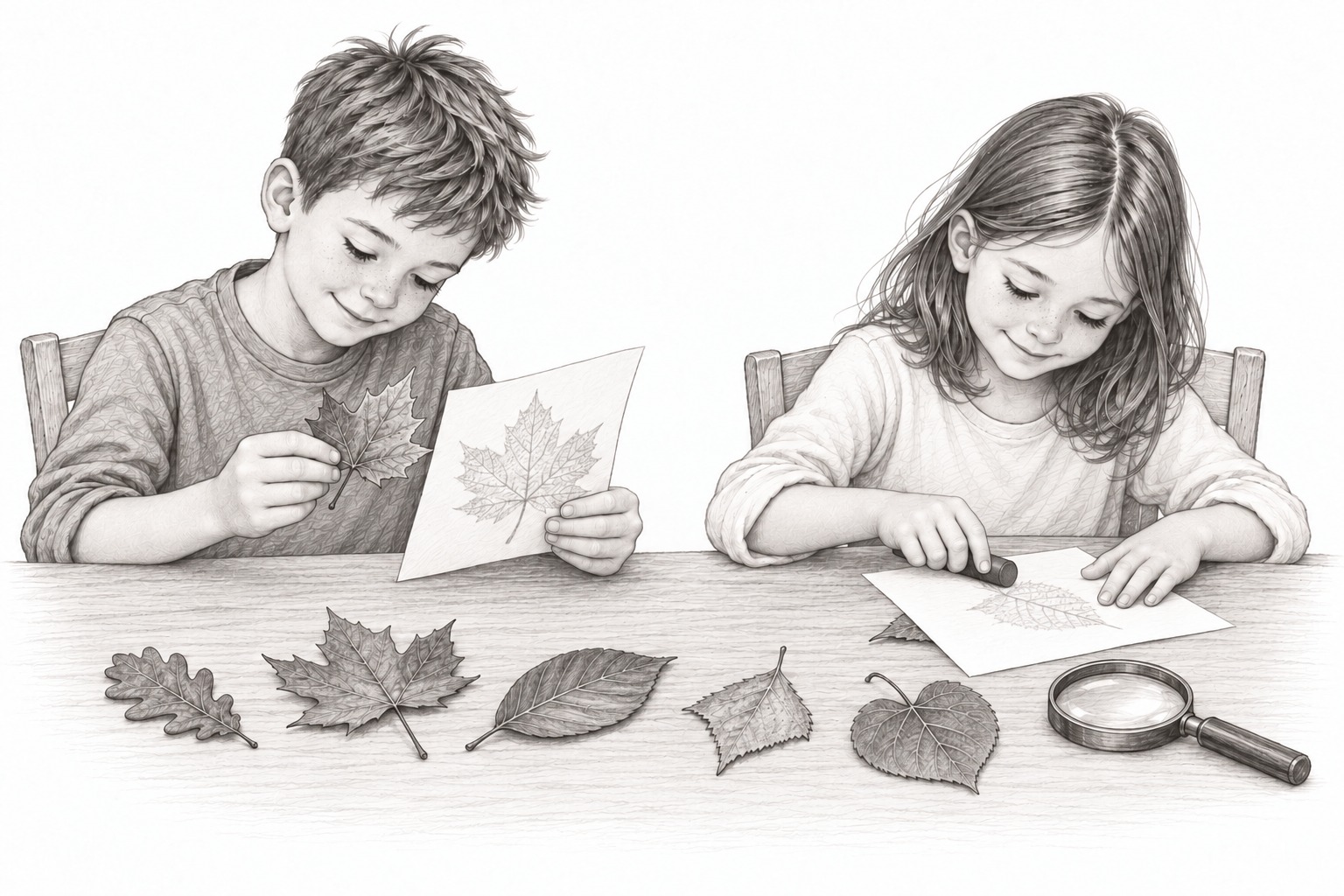
Five leaves, five patterns
Look for different fallen leaves somewhere collecting is allowed. Compare their shapes, edges and veins. Do two similar leaves necessarily come from the same tree? Keep the questions you cannot answer yet.
At home, place a leaf beneath thin paper and rub gently with the side of a soft pencil. Its pattern appears on the page. With an adult, compare the leaf with a reliable field guide. Colour or a single feature is not always enough to identify a species.
Map a little expedition
Choose a familiar, safe route. Your child marks three points on paper: the start, something interesting along the way and the finish. Invented symbols can replace place names. Afterwards, see whether the map helps explain the route to someone else.
A younger child draws remembered places. An older child can add directions, compare distances in footsteps or make a key. The adult stays close and remains responsible for the route; the map is not an invitation to wander off alone.
Where did the shadow go?
On a sunny day, find the shadow of a fixed object in a safe place. Mark its end with chalk where permitted, or take a photograph. Return later and compare. What stayed the same, and what changed?
Let your child suggest an explanation. The Sun’s changing position across the sky during the day is related to Earth’s rotation. Never look directly at the Sun. Cloudy weather may mean trying another day rather than expecting a visible result.
A small expedition with thoughtful care
Choose a route that suits the weather, your child’s age and their abilities. Do not taste unidentified mushrooms or plants. Let an adult assess unfamiliar finds before touching them. Leave animals undisturbed and plants intact.
The best question may arrive outside your plan. Draw it or write it down. At home, choose one to investigate together. “I can see a hole in this leaf” is an observation; “a caterpillar made it” is a possible explanation that still needs evidence.